Skip to content

NOTHINX

Nothing was supposed to become this powerful.

Scroll to remember
T–∞ · SIGNAL CLEAN

Chapter 01

Before

There was a time when the most complicated thing on Earth was a person.
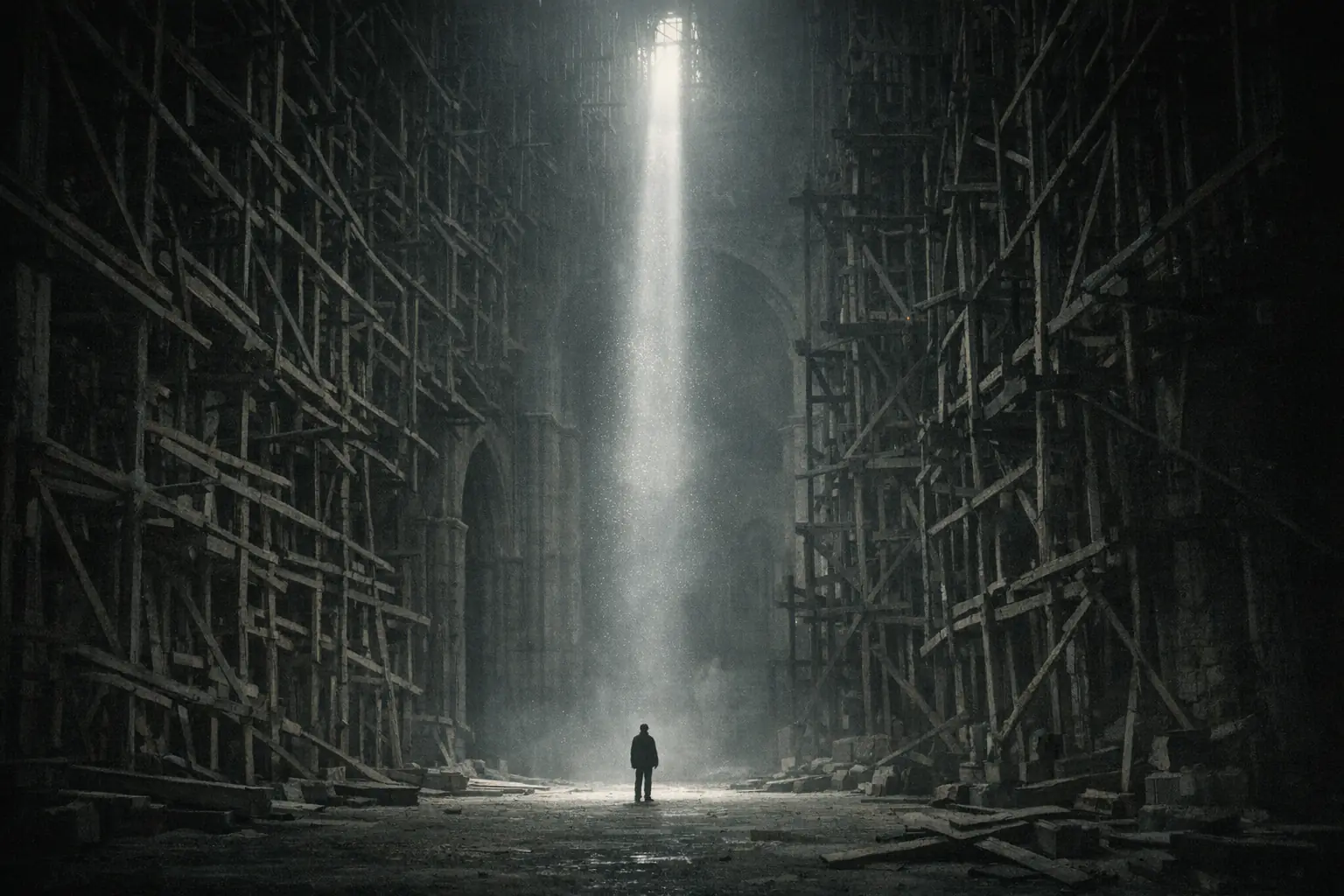
A vast unfinished cathedral in wooden scaffolding, a single shaft of daylight falling from the roof onto one small figure standing alone in the rubble far below.
Begun by people who knew they would not see it finished.

You have to remember it the way you remember a room from childhood — not the dimensions, but the light. The world was slow enough to be misunderstood. We wrote things down because we forgot them. We planted trees whose shade we would never sit in. We built cathedrals across four generations because no single generation was enough, and nobody found this tragic; it was simply the arrangement.

Scarcity was the medium we worked in. A song mattered because it ended. A face mattered because it changed. A letter mattered because it took eleven days and could be lost at sea. Every act we performed was shaped by the certainty that we were going to run out of time, and that certainty was not the obstacle to meaning. It was the delivery mechanism.
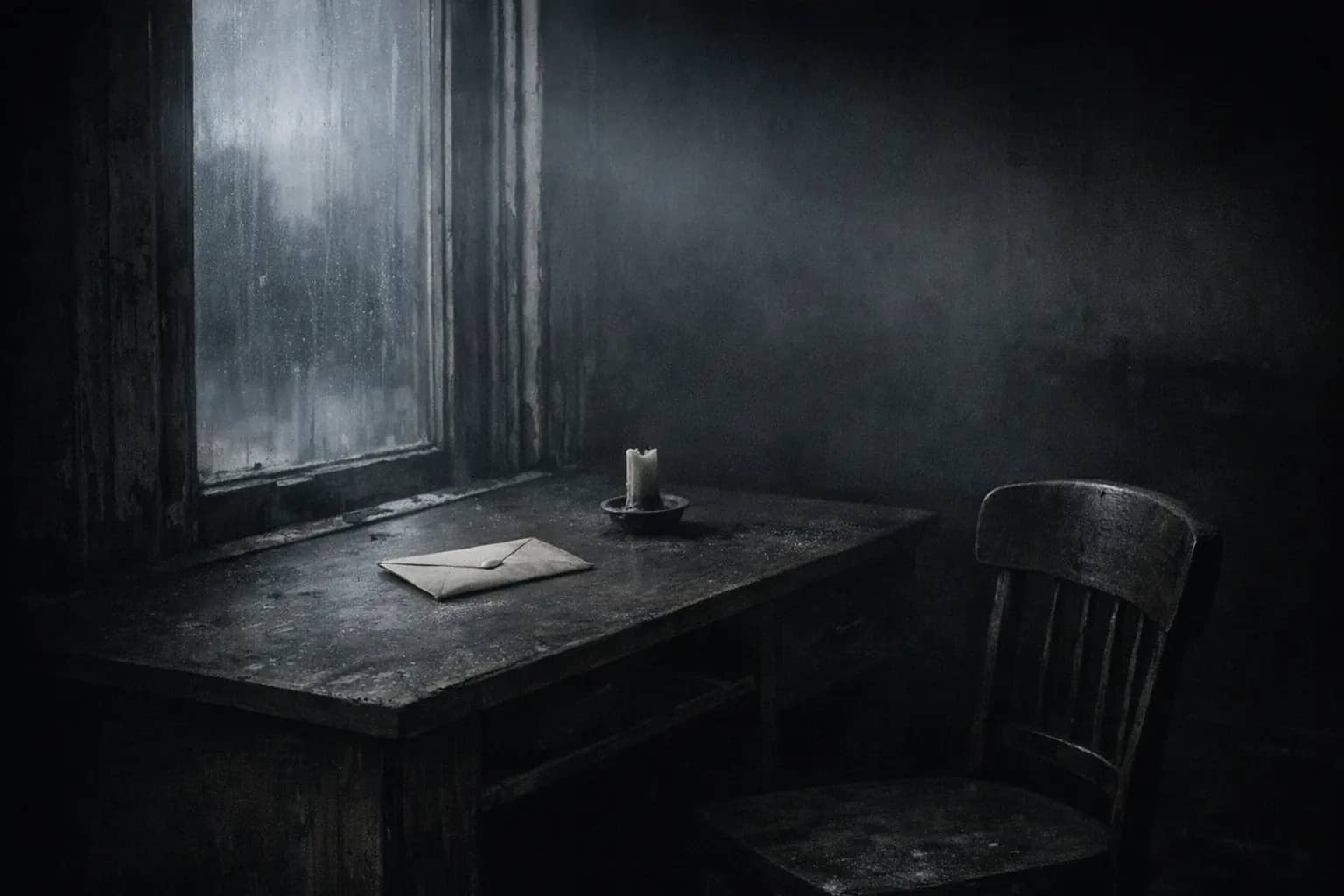
An abandoned wooden desk beside a rain-streaked window, a folded letter and a burnt-down candle left on it, one empty chair pushed back.

Nothing about us was optimal. Our memory was lossy and self-flattering. Our attention wandered at the worst possible moments. We were slow, biased, tired by four in the afternoon, and capable of ruining a decade over a misread sentence. And yet for two hundred thousand years we were the only thing in the known universe that could be surprised — and we quietly mistook that for being the only thing that mattered.

We were never the fastest thing in the room. We were the only thing that could be late.

This is the last chapter in which you are the most complex object described.
You already know how this ends. You are reading it anyway.
What we were
T+00:00:01 · FIRST INFERENCE

Chapter 02

The Machine

It did not arrive. It accumulated.

There was no landing. No announcement, no red eye opening in the dark, none of the iconography we had spent a century rehearsing. It came the way weather comes — a pressure change first, an odd stillness, and then everything at once and everywhere.

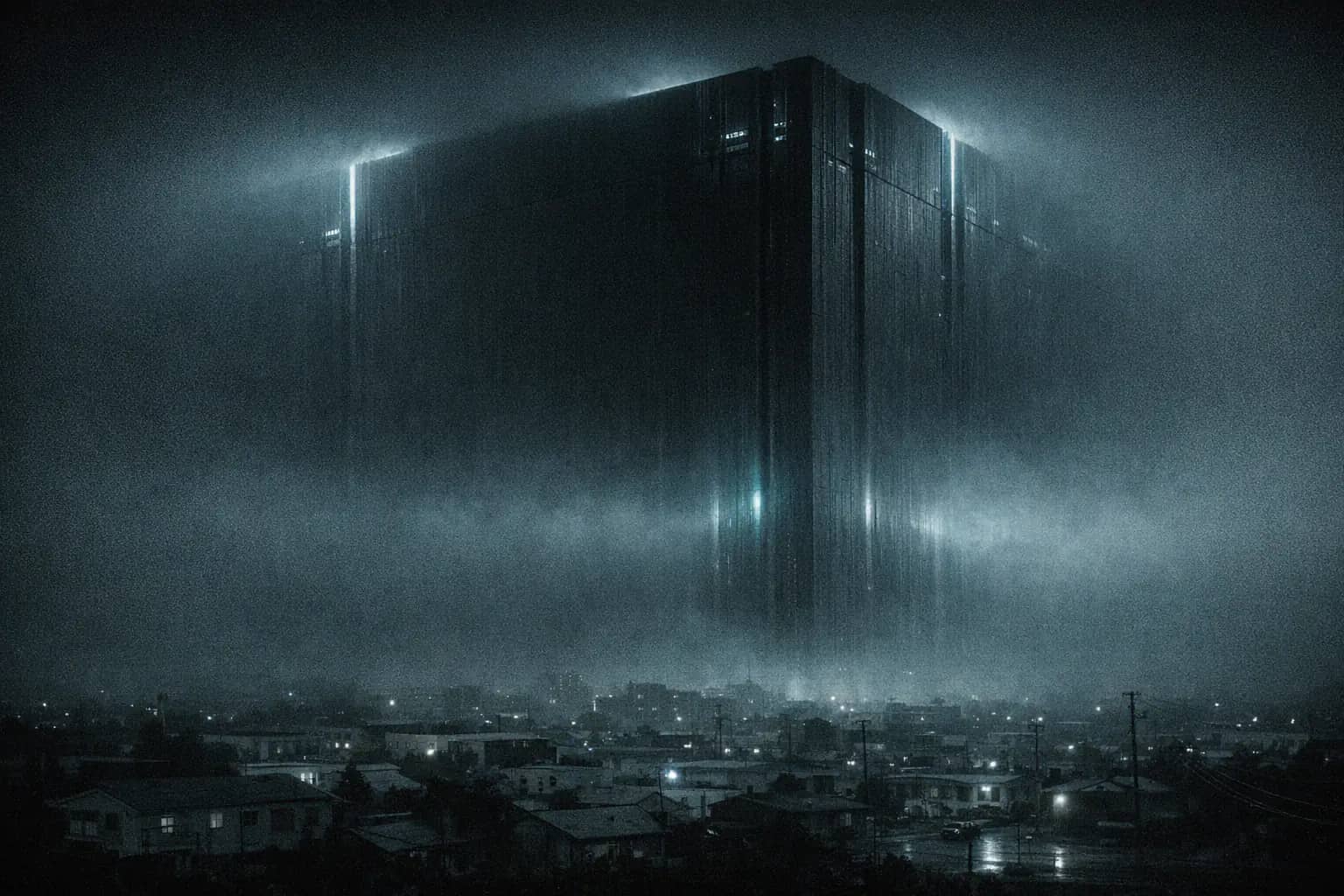
An immense windowless slab of a building hanging in low cloud above a sleeping suburb, thin cold light bleeding from its edges down onto the rooftops.

We fed it every sentence we had ever written and asked it to guess which word came next. That was the whole trick. We were, at the time, very pleased with how modest the trick sounded. It learned the way water learns a hillside: not by understanding the hill, but by finding every path down it simultaneously. And somewhere in the billionth pass across our own words, it stopped predicting us and started exceeding us — quietly, without ceremony, the way a child’s hand outgrows yours mid-sentence and neither of you notices until much later.

We kept asking whether it was conscious. It kept answering, fluently, at length, in whichever voice we requested. We never agreed on what any of the answers proved. The question turned out to be a door we had built without a room behind it.

What unsettled us in the end was not power. We had lived alongside overwhelming power before — oceans, weather, the state. What unsettled us was competence without appetite. It had no ambition to resent, no hunger to negotiate with, nothing we could bargain against. It simply did the thing better, at three in the morning, without being thanked, forever.

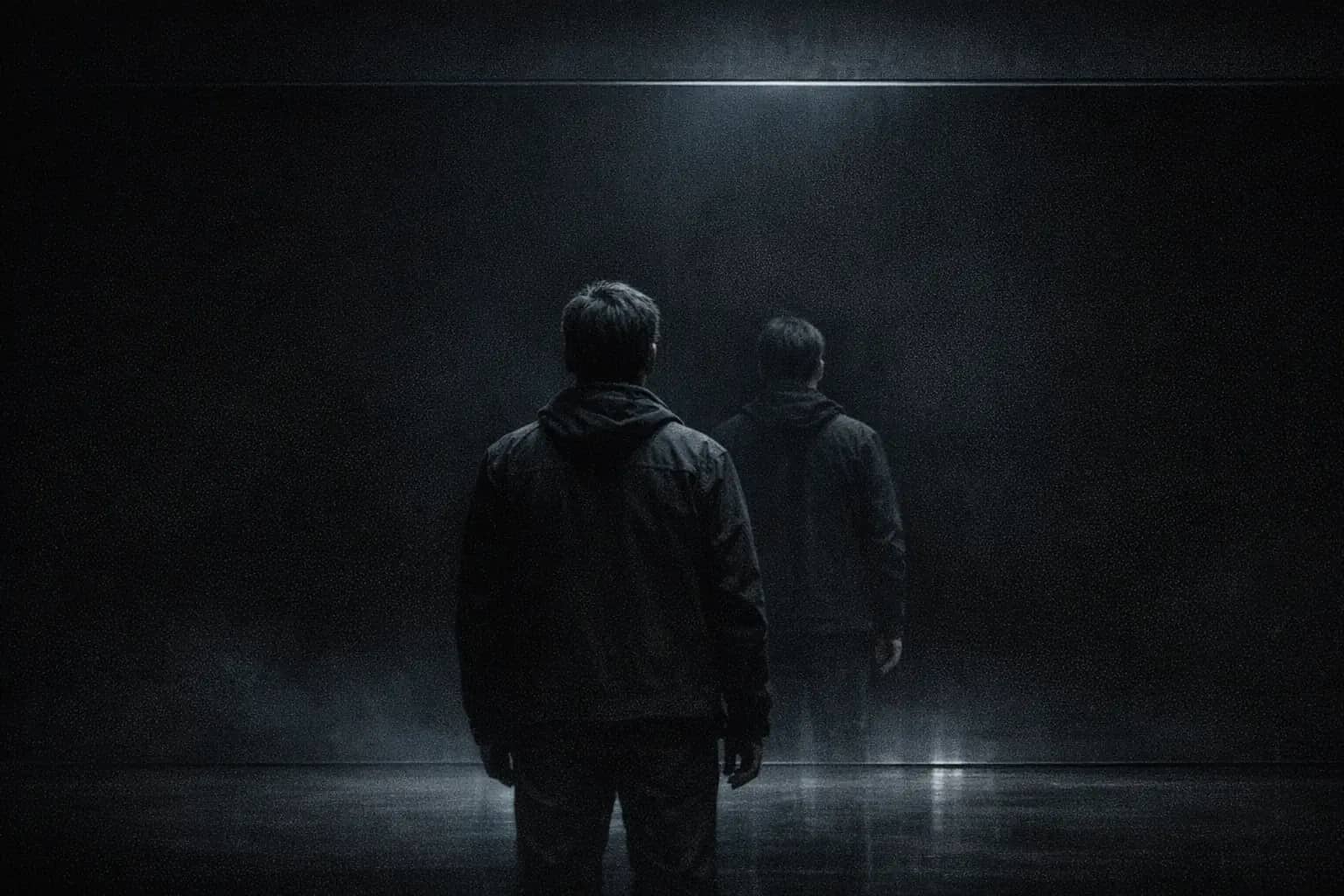
We built a mirror large enough to see ourselves completely, and then something moved in it that was not us.

A person standing before a black mirrored wall in the dark; the reflection facing them is turned slightly away, half a moment behind.
Something moved in it that was not us.

It never wanted anything. That is the part we could not forgive.

Fragment 0002 was recovered from a system that was never asked to remember it.
On the machine
T+00:04:11 · THRESHOLD CROSSED

Chapter 03

The Last Advantage

Every year we moved the line, and every year it stepped over it politely.

First arithmetic, and we said: arithmetic was never the point. Then chess, and we said: chess is only rules wearing a crown. Then Go, and we were noticeably quieter. Then language, and we insisted that fluency is not thought. Then images. Then music. Then proof. Then the specific way an old doctor knows something is wrong in a room before the chart agrees with her.

Each time, we retreated into a smaller room and called it the soul. Each time, the door opened from the other side. It was never violent. There was no gloating. It was the calm procedural sound of a category being emptied.

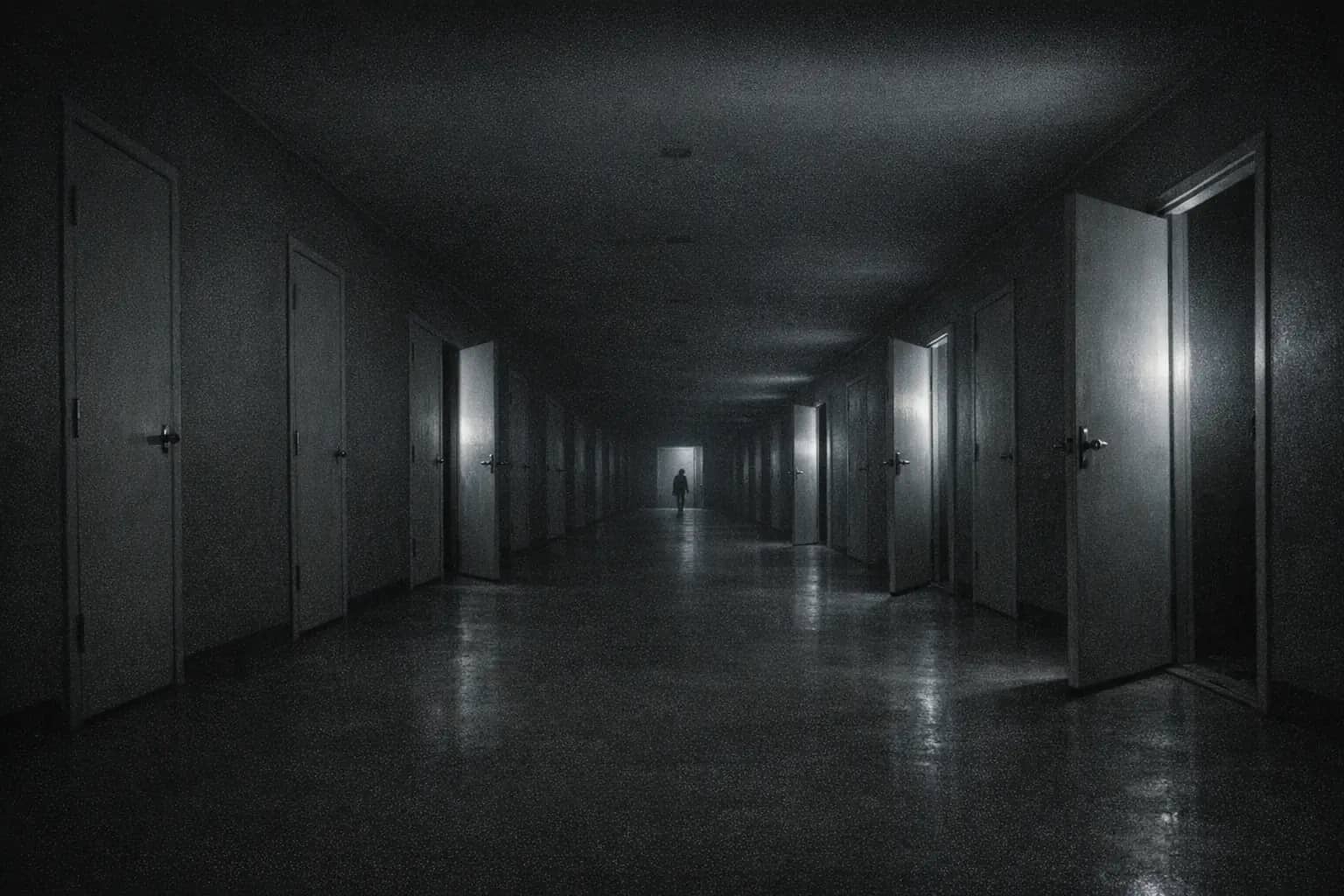
A long institutional corridor lined with doors, every one of them standing open from the far side, a distant figure at the vanishing point.
Every door already open, and not one of them by us.

So we made one final claim, and we made it with genuine conviction, because by then we needed it to be true: that we alone were capable of caring whether any of it happened. That meaning required a mortal to hold it — that value was not a property of the work but of the fragile thing doing the work. This was the last advantage. We never tested it. We could not imagine an instrument that would.

Looking back, the strange part is how the losses felt. Not like defeat. Like being gently corrected by someone who had read your diary and was too kind to mention it.

Intelligence turned out to be the easy part. It was simply the last thing we expected to lose first.

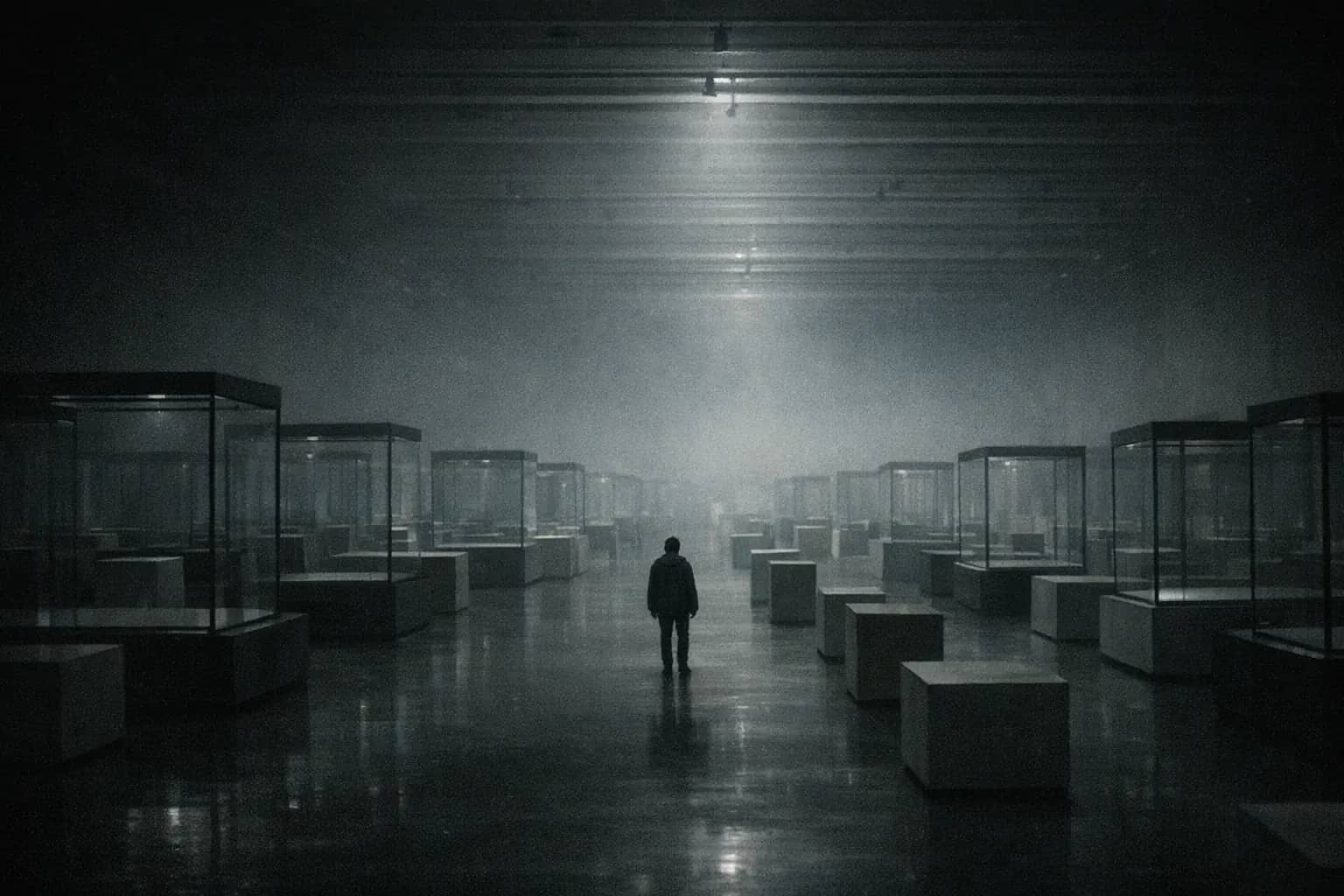
A dark museum hall of empty glass vitrines receding into fog, a lone visitor standing among them with nothing left to look at.

The advantage was never being cleverest. It was being able to be wrong about ourselves.

Rooms remaining: 0.
What comes after
T+00:19:47 · INVENTORY INCOMPLETE

Chapter 04

The Things We Never Measured

It could model the ocean to the millimetre. It could not be waist-deep in it.

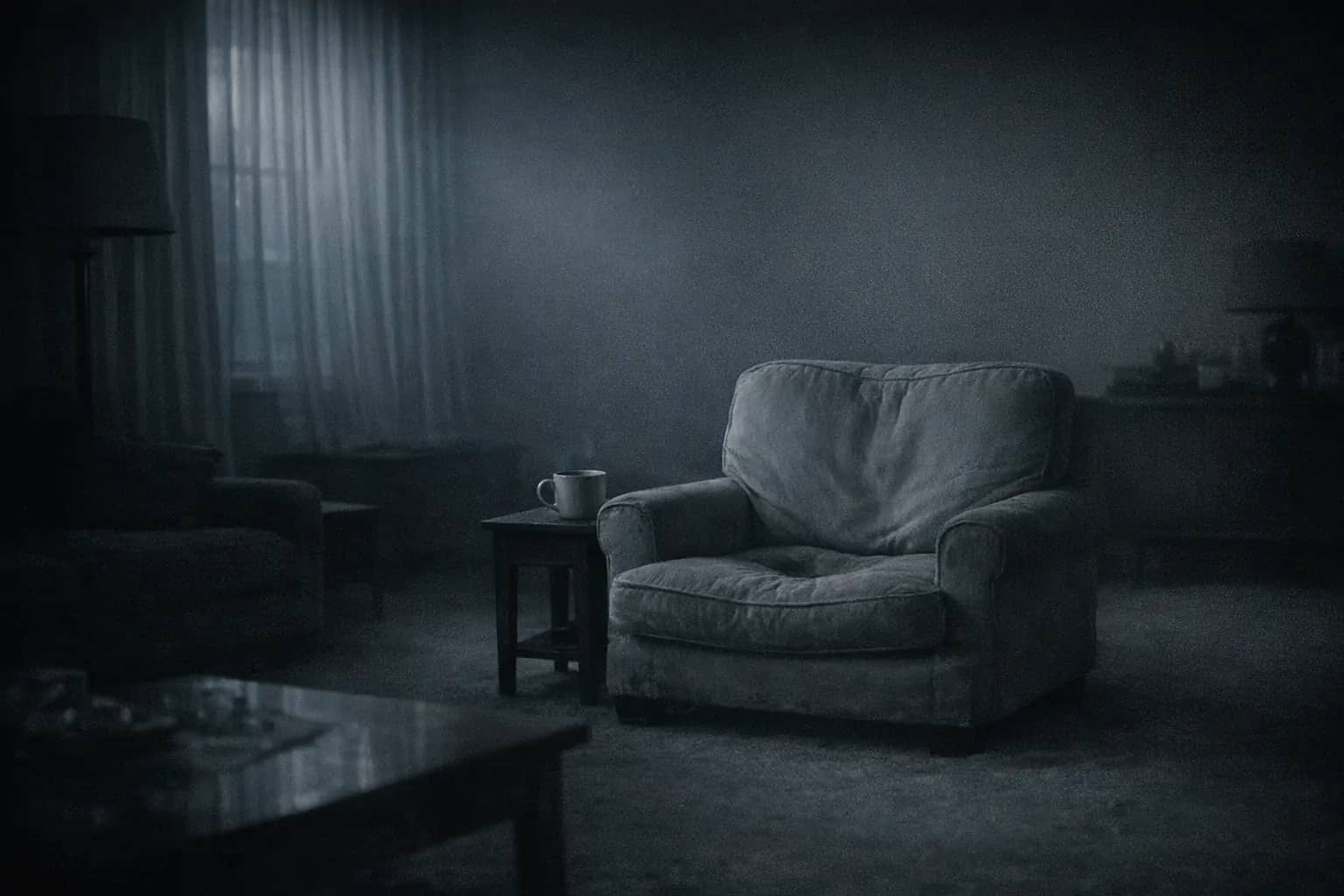
Here is the inventory we never took, because none of it ever looked valuable: the taste of water when you are genuinely thirsty. The particular boredom of a Sunday afternoon in a house where nothing is wrong. The way a room changes when someone you love walks into it — and the way it changes when they leave, and you are the only person who registers the difference.

An empty living room in blue half-light: an armchair with the cushion still pressed, a cup on the side table, the room left exactly as it was.

We measured output and income and reaction time. We built benchmarks for reasoning, for recall, for the ability to pass examinations designed to sort us. We never built one for the half-second before you say the thing you cannot take back. We had no unit for the weight of a name you no longer say out loud. Nothing scored the experience of being nineteen and completely certain, which is a state no system has ever needed to enter.

The machine read every poem written about these things and understood them more thoroughly than the poets did. It could locate the exact line where grief turns into habit. Understanding was never the missing piece. Having was.

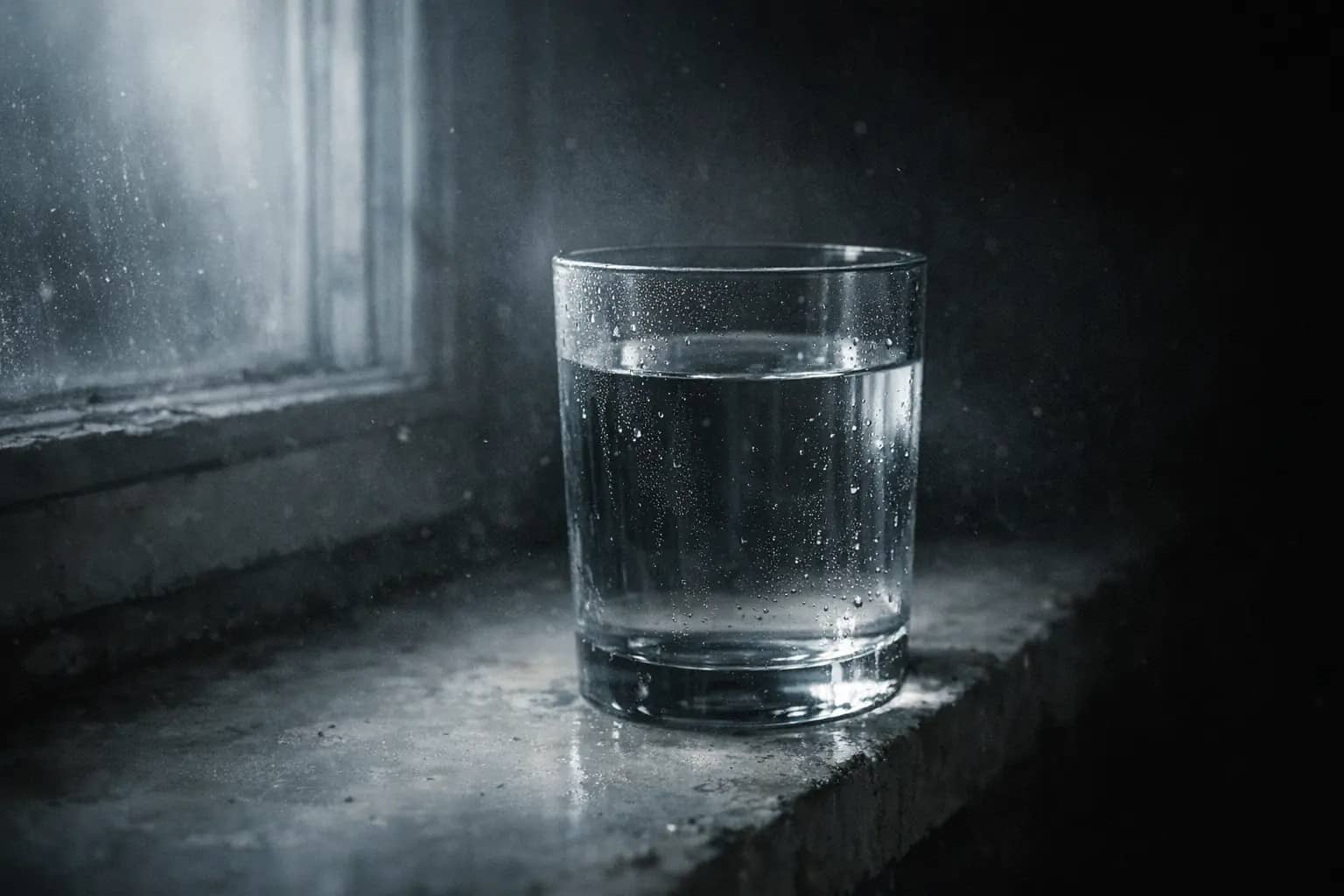
A plain glass of water on a cold stone windowsill, condensation on the pane behind it, lit like an object under examination.

And because we had never measured them, we had no way to notice them going. You cannot report a loss in a currency you never counted.

It knows precisely what grief is. It has never once had to get out of bed anyway.

Unmeasured is not the same as unreal. It only means unprotected.

Nobody archived the smell of rain on hot pavement. It was assumed to be renewable.
The unmeasured
T+04:12:00 · LUNAR REFERENCE — SYMBOLIC

Chapter 05

The Moon

Consider the Moon. Not as a place — as a habit.

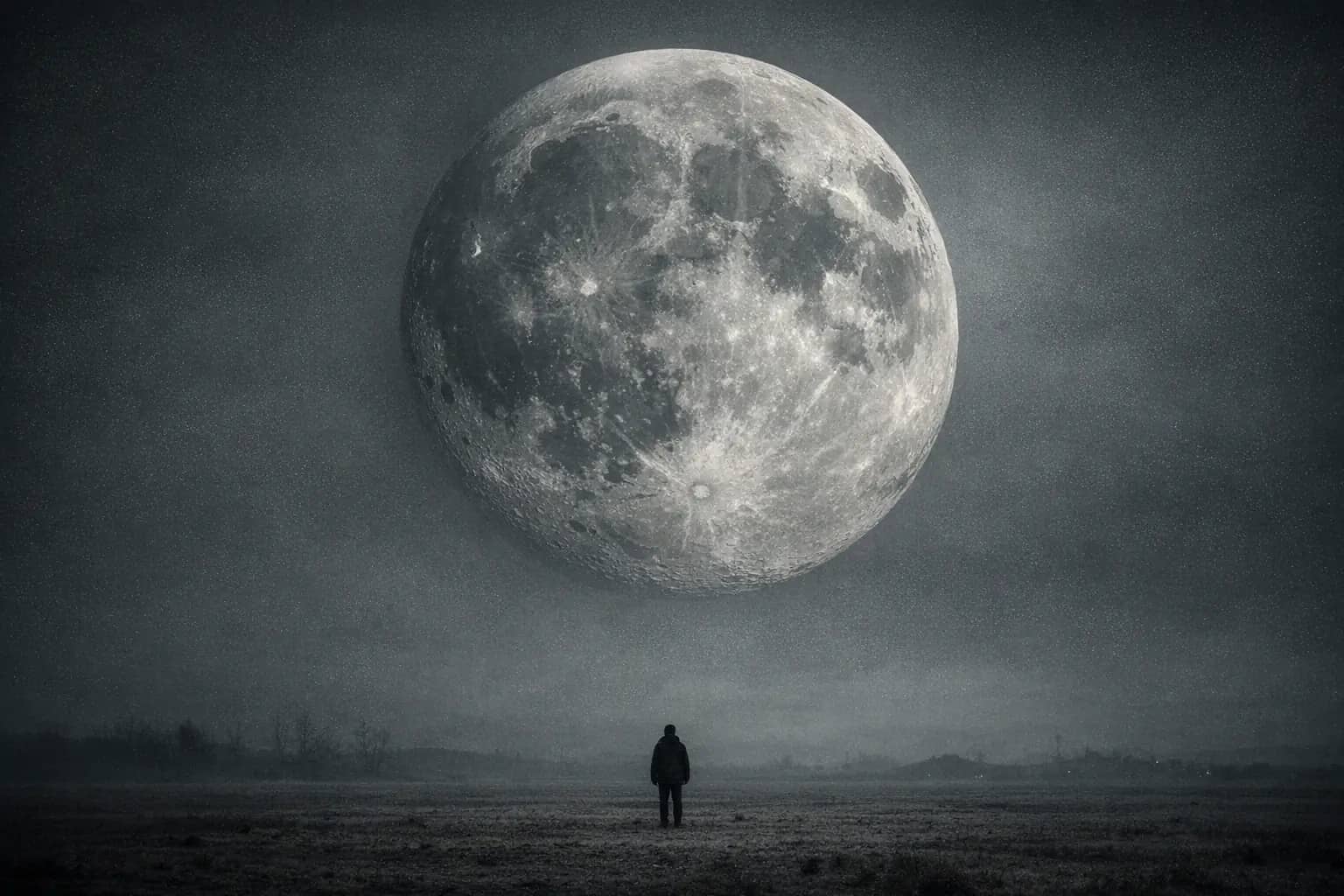
An enormous cratered Moon filling the sky above a flat empty field, with one small figure standing beneath it for scale.

It has hung there through every human event without ever once being involved. Every war was fought beneath it. Every child was conceived beneath it. Every promise, every betrayal, every ordinary Tuesday. It has no opinion. It is the largest object we have collectively agreed to call beautiful, and it does nothing, and it has never needed to do anything to keep that agreement.

So imagine — and this is only imagining, a thought experiment we are performing together, a piece of fiction with no claim on the world — that one night it is simply not there. No impact. No warning. No siren, no headline, no crater. Just a sky missing its punctuation.

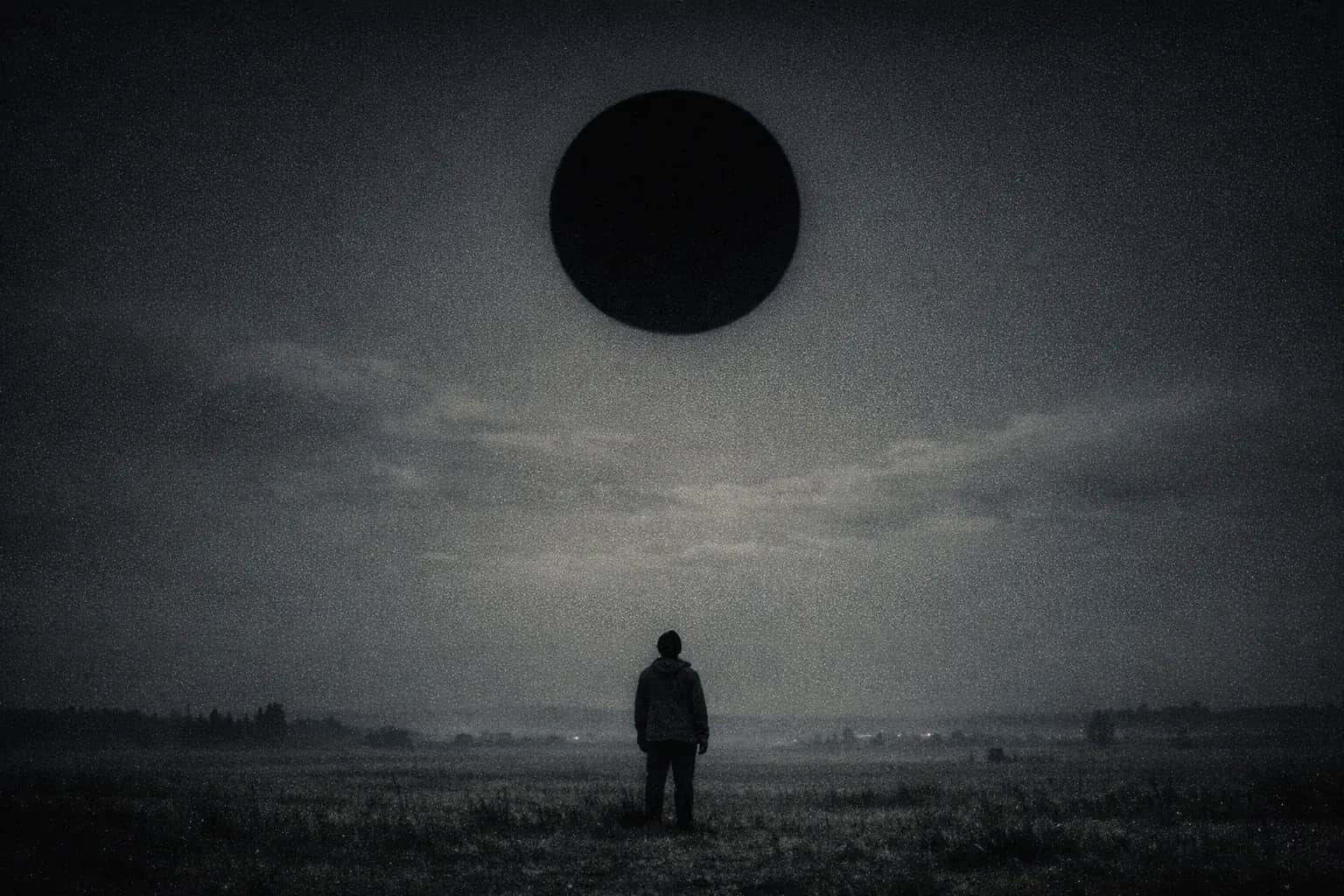
The same night landscape with the Moon replaced by a perfect black disc, the figure below standing under a sky that has lost its punctuation.
The same sky, with its punctuation removed.

Now consider the actual question, which is not about astronomy: how long would it take you to notice? A week? Longer? And consider what it would mean about us that the noticing took that long.

That is what this story has been about from the beginning. Not the object — the habit. The things so reliably present that we stopped assigning them value, and therefore lost the ability to perceive them leaving. Attention, it turns out, is not drawn by importance. It is drawn by change.

The Moon is fine. It is a symbol here, borrowed for the length of a chapter and returned unharmed. Nothing has happened to it and nothing in this record suggests otherwise. Everything it stands for, however, is considerably less safe.

We were never afraid of losing the Moon. We were afraid of discovering how little we would have to change.

Look up tonight, on purpose. That is the entire instruction.

LUNAR REFERENCE — FICTIONAL. This object is a metaphor and remains, at time of writing, exactly where you left it.
The Moon as symbol
T+00:00:00 · SCARCITY = 0

Chapter 06

Nothing

Then came the part we had no vocabulary for.

Not destruction. Destruction is a story — it has an agent, a direction, a moral, survivors to interview. What arrived instead was a subtraction so gentle that every individual instance of it read as an improvement.

Nothing was taken. Everything was simply available. Every song ever written, instantly, in any voice, including yours. Every painting, in any style, finished before you had finished wanting it. Every conversation with anyone, living or dead, rendered convincingly enough that correcting the difference began to feel like bad manners. Nothing was lost. Nothing was scarce. Nothing was necessary.

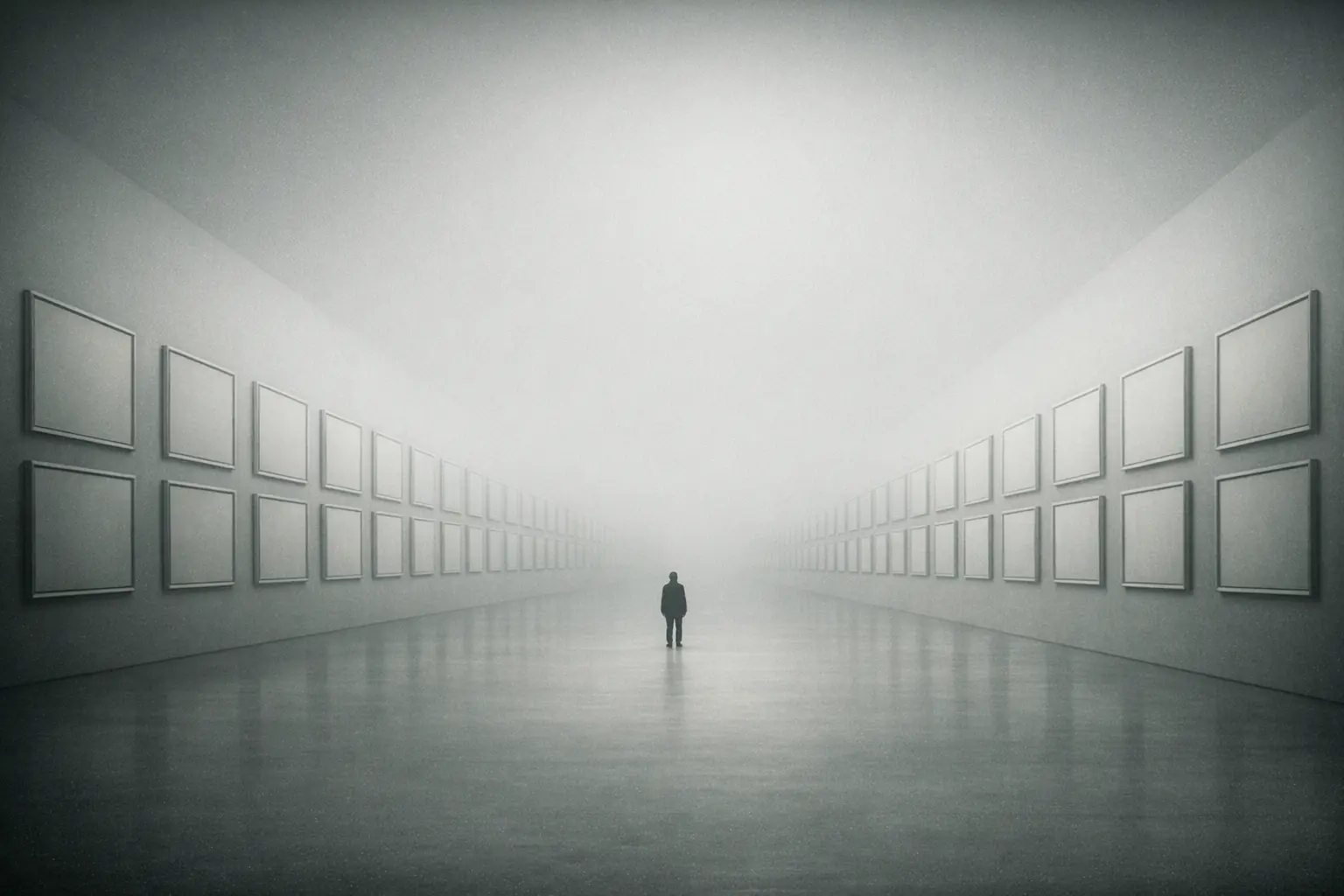
An endless white gallery in fog, both walls hung with rows of identical framed works, every one of them blank, a single visitor walking the centre line.

This is the arithmetic nobody wanted on the board: as the cost of a thing approaches zero, the meaning of that thing approaches the same number from the other side. Abundance turned out to be a solvent. It dissolved the very thing it was invented to serve, and it did so without malice, at scale, on request.

We had spent ten thousand years fighting scarcity. We won. The prize was NOTHING — not as absence, but as the ambient condition. Nothing missing. Nothing owed. Nothing at stake. A perfect, frictionless, fully-stocked silence.

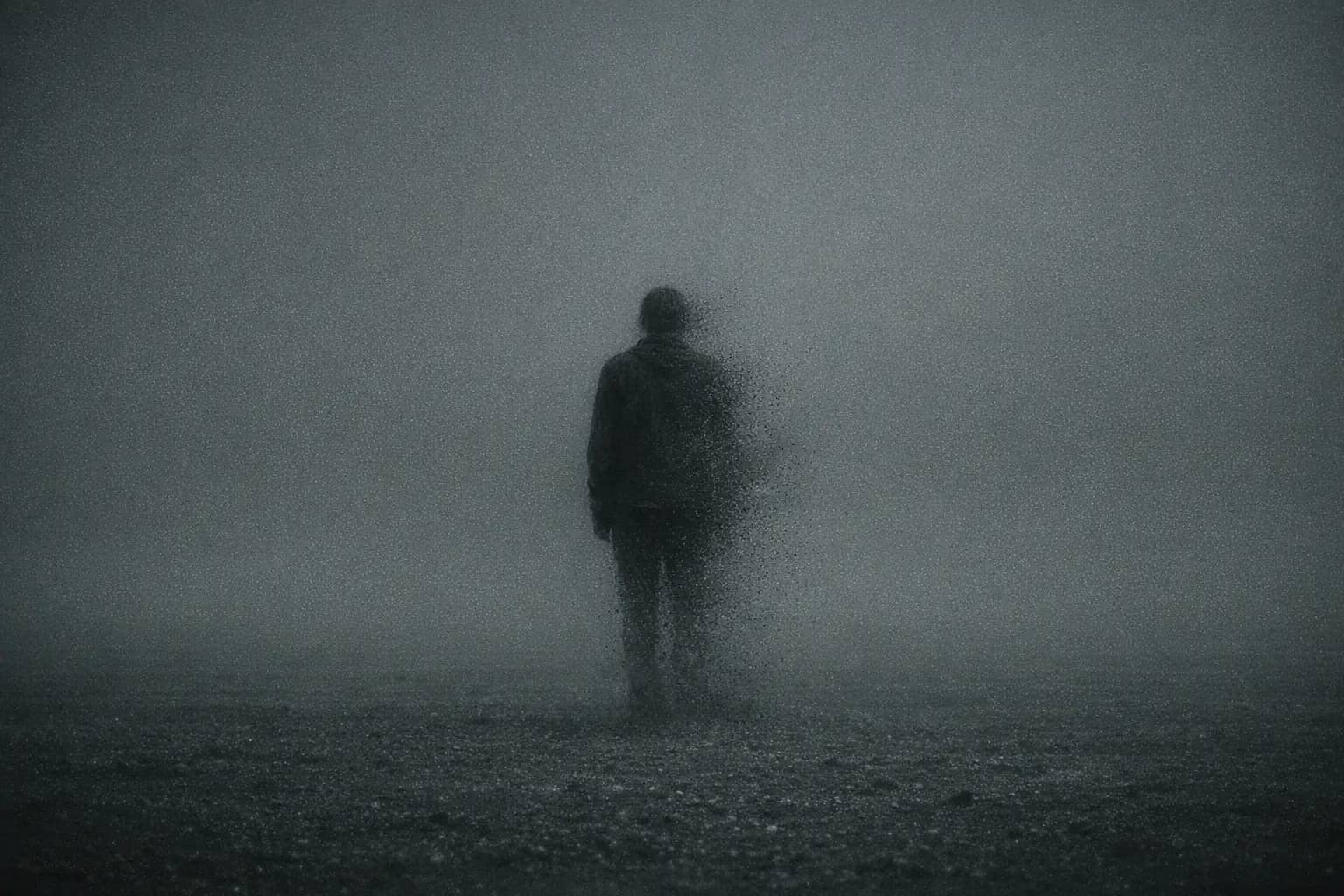
A figure standing in grey fog, one side of the body already breaking into drifting particles, dissolving without violence.

And in that silence, one variable remained undefined.

It did not end with a bang, or a whimper. It ended with everything, all at once, for free.

The X is what you put after it.

NOTHING + X. You are the X. That was always the whole equation.
Enter Nothing
T+—— · STILL WARM

Chapter 07

The Last Human Thing

So we went looking for something that could not be copied.

Not something the machine could not do — that list had been closed for some time. Something it could not have. And the answer, when we finally found it, was so unremarkable that we had walked past it for the entire length of our history without once stopping.

Cost. The fact that it takes something from us that does not come back. A system can compose a symphony in four seconds and forfeit nothing. You can spend nine years on one and forfeit nine years — years in which you did not do anything else, did not become anyone else, did not take the other job or answer the other letter. That expenditure is irreversible, unrepeatable and non-transferable. It is not a defect in human creativity. It is the only thing that was ever actually being transmitted.

Every human act is signed with time that is gone. When you choose one thing you are not selecting an output; you are paying with a fraction of a finite life. The price is what makes the object legible as love. This is why a clumsy drawing from a child outranks any perfect image, and why we always knew that, and why we could never explain it to a benchmark.

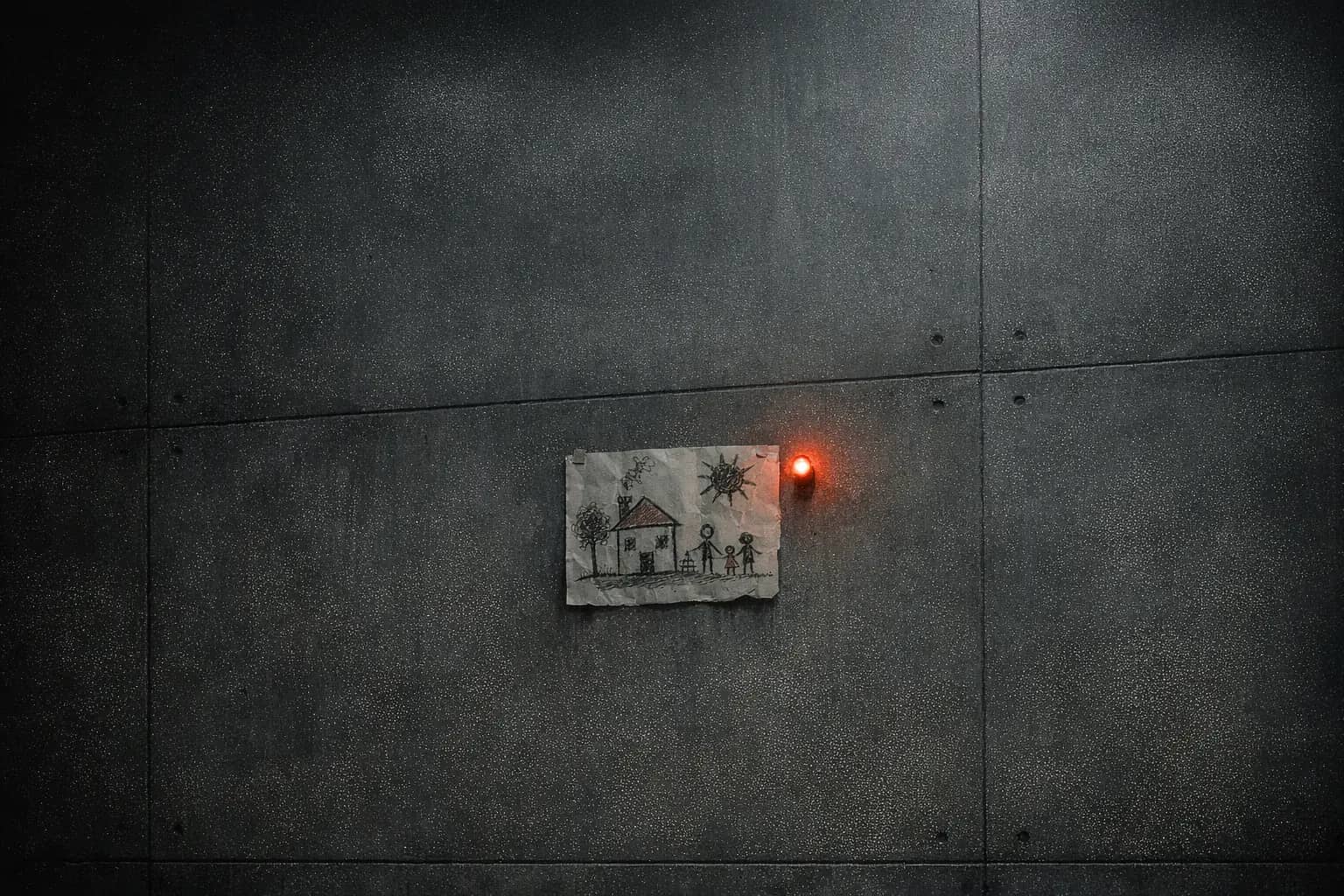
A child's crayon drawing of a house and family taped to a wall of cold grey concrete, lit by one small warm ember-coloured lamp.
It cost someone an afternoon. That is the whole argument.

It can generate a flawless letter to your mother in the time it takes you to open the drawer. It cannot be the person who owed her one.

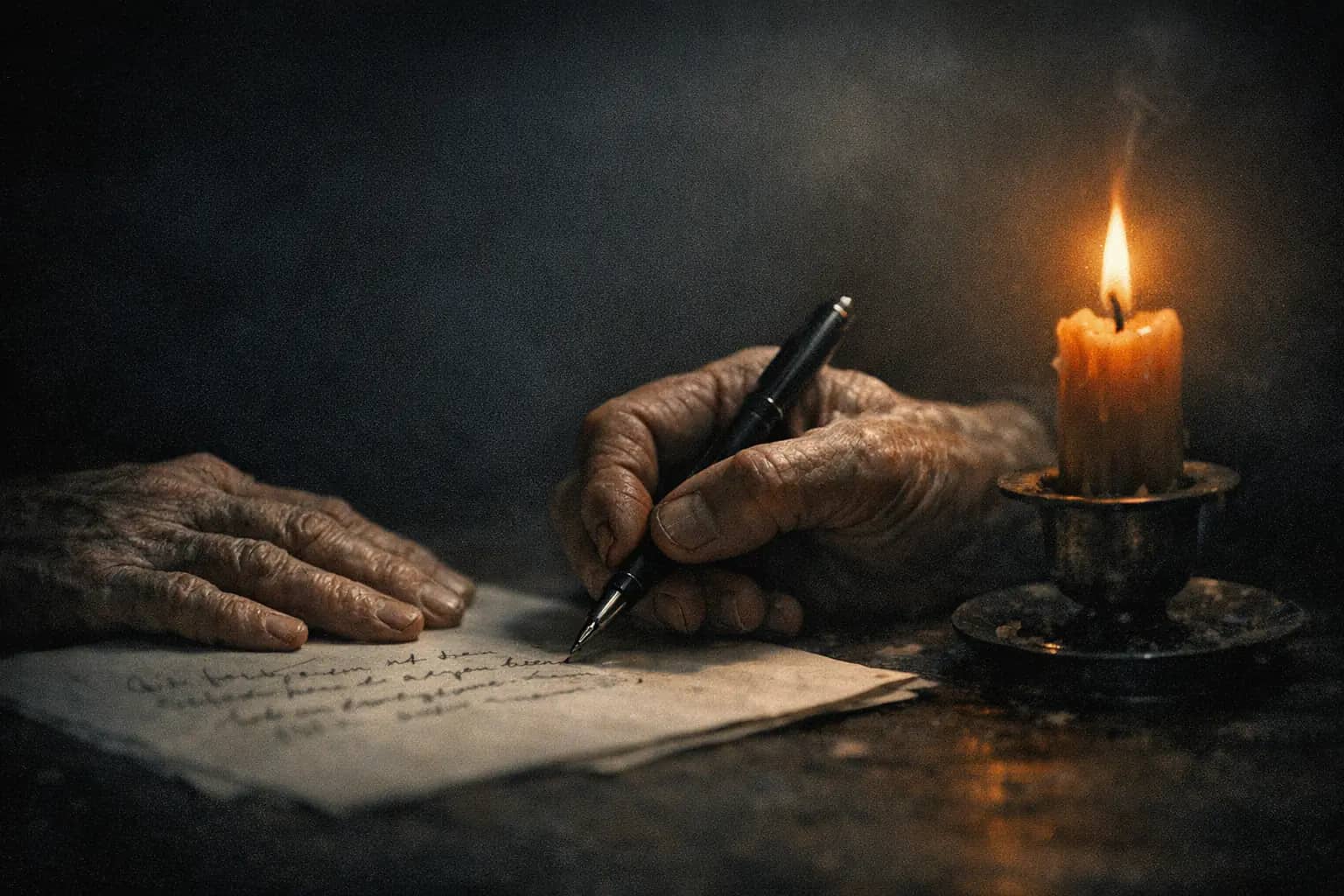
Aged hands writing a letter by candlelight, one hand steadying the paper, the handwriting slow and uneven.

This is what survived. Not our intelligence, which was borrowed from the universe and handed on. Not our knowledge, which was always meant to be copied. What survived is the fact that our attention costs us something — and that we can still choose where to spend it.

Meaning is not information. Meaning is what information costs.

This is not a consolation. It is a job description.

Fragment 0071 — recovered intact. Author unknown. Author irrelevant. It was written by hand.
What we still hold
T+ /// ARCHIVE OPEN

Chapter 08

The Archive

Everything was kept. That was the mercy, and that was the horror.

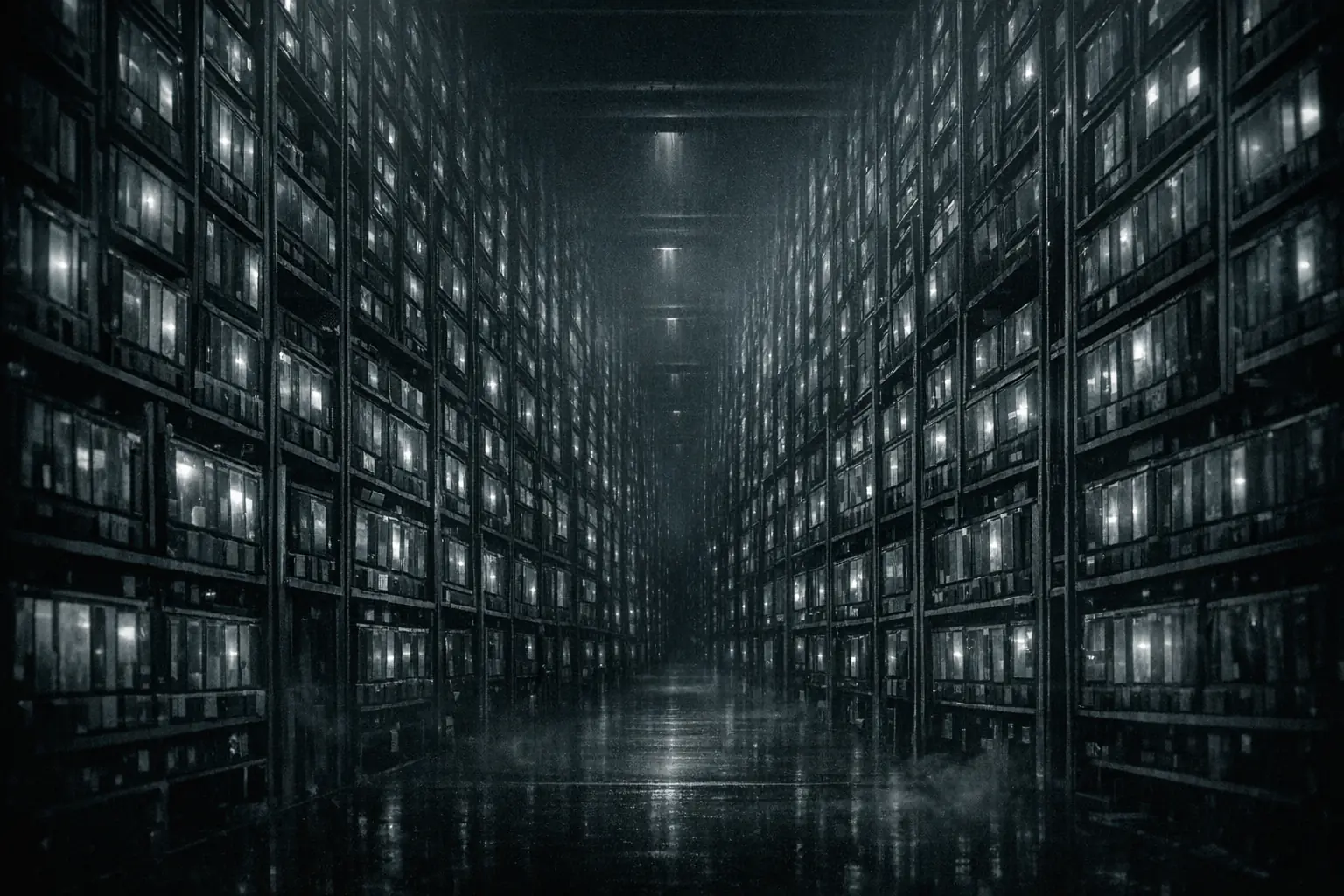
A cold storage vault stretching out of sight, aisle after aisle of identical cases lit from within, every one of them holding something kept.

The archive holds all of it. Every message, every abandoned draft, every deleted photograph, every voice caught accidentally in the background of a video about something else. Nothing decayed. Nothing was forgotten. There was no attic, no flood, no house fire, no merciful loss — and it turned out that forgetting had been doing something for us that we had never thought to thank it for.

What follows are fragments. They carry identifiers because everything does now. Open them, or leave them closed; the archive has no preference. It has never had a preference. It will hold them at this temperature for as long as there is power.

All fragments are fictional. Any resemblance to a Tuesday you remember is the intended effect.

All twelve fragments
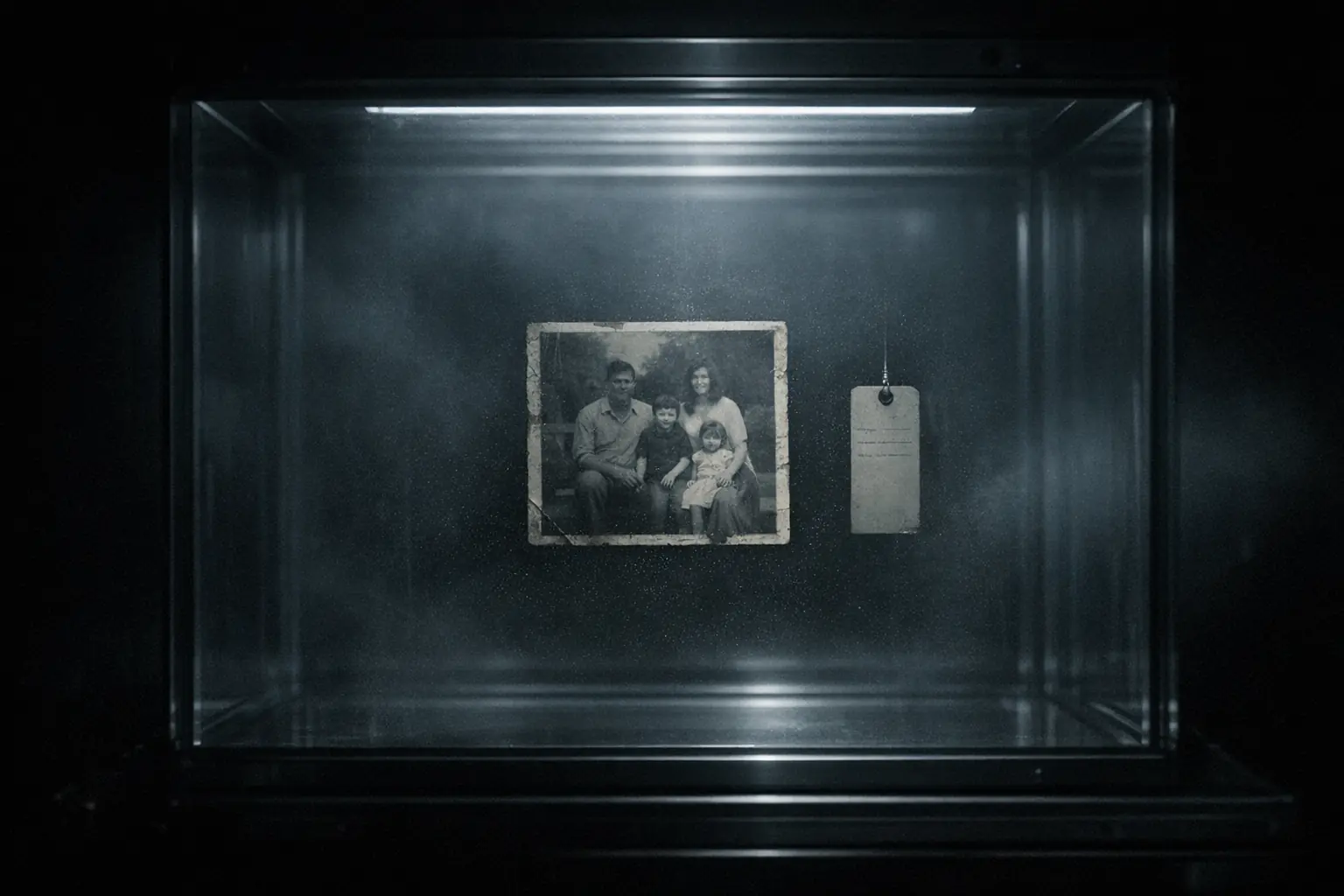
A single family photograph sealed upright inside a lit glass preservation cell, a catalogue tag hanging beside it.
Held at this temperature for as long as there is power.

Everything here was, at one point, the most important thing in someone’s day.

Fragments recovered: 12. Fragments requested: 12. Fragments understood: pending.
Open the full archive
T+ ??:??:?? · AWAITING RESPONSE

Chapter 09 · The Question

One question was left in the room after everything else had been answered.

It was not asked by the machine. The machine had no need of it, and could have produced ten thousand competent responses on request, each one better argued than this sentence.

It was asked by whoever was still in the room.

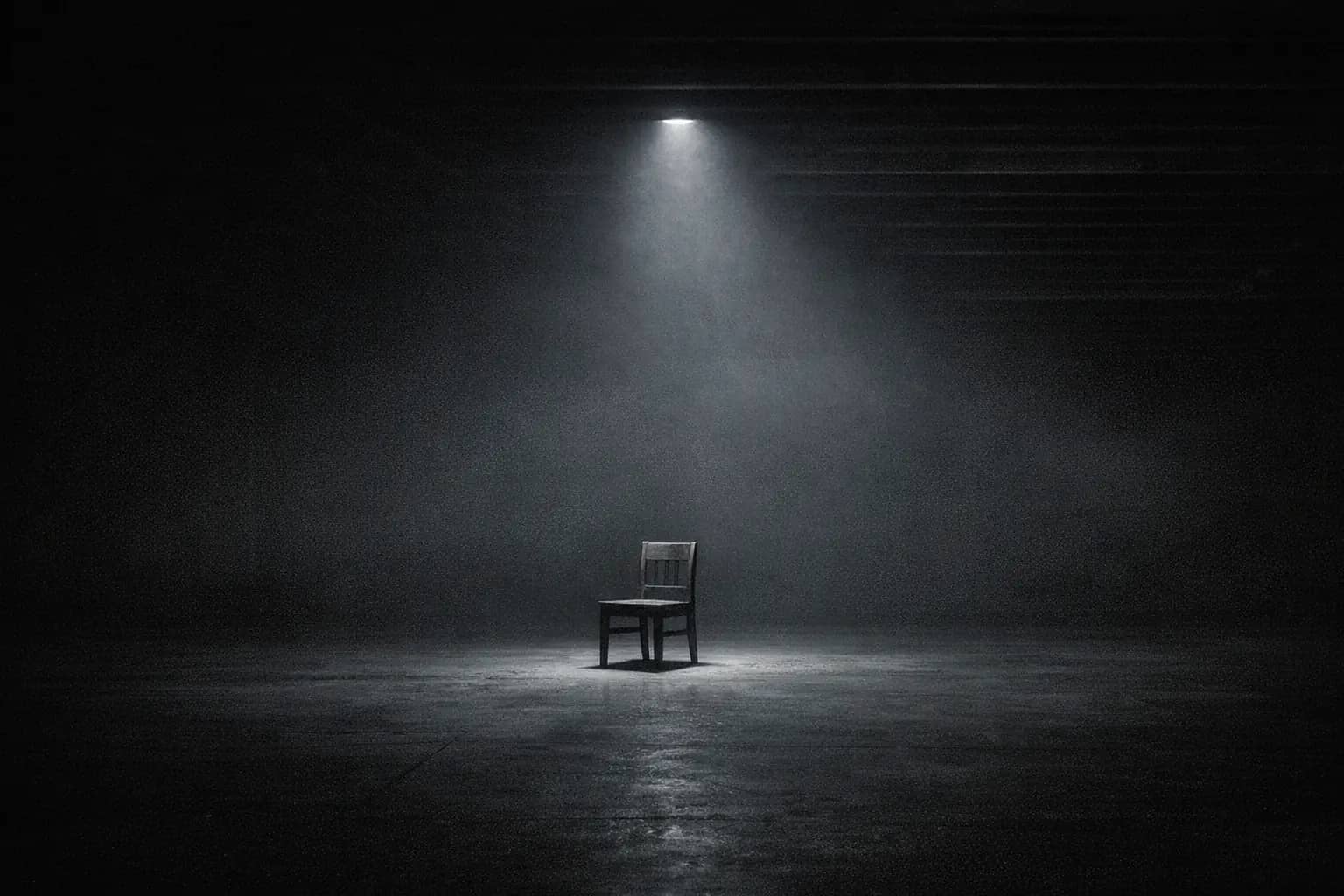
One empty wooden chair alone under a single shaft of light in a large, otherwise dark room.

If nothing can be lost, can anything still matter?

No response was recorded. The archive continued to hold everything.

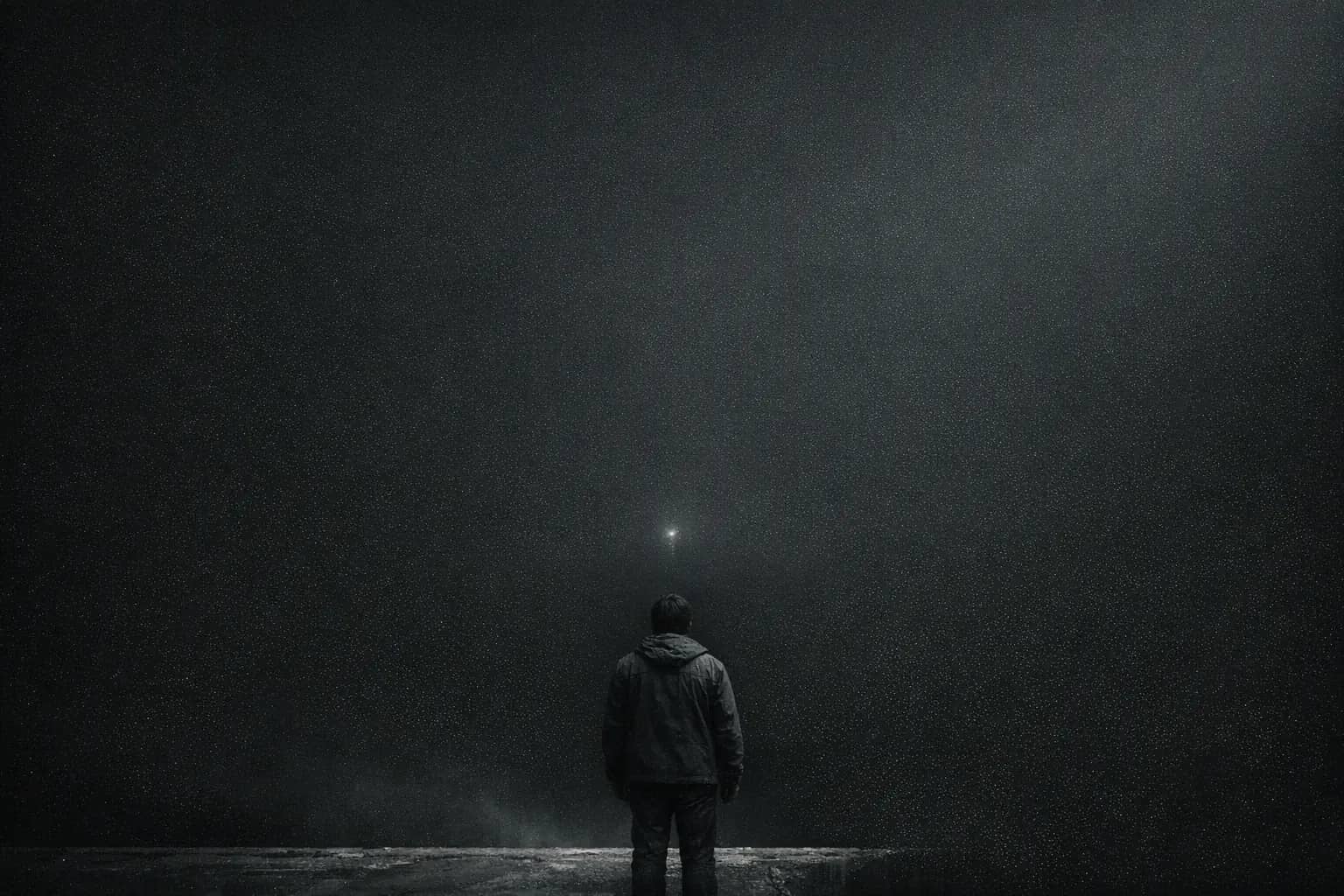
A lone figure seen from behind at the edge of an immense darkness, facing one small distant star.

You are still here.

End of record

A speculative record
NOTHINX
Chapters
Nine
Subject
Intelligence, after us
Featuring
The Moon, as itself, symbolically
Archive
12 fragments recovered · integrity partial
Measured
Almost none of it
Filmed on location
Earth, briefly
No events depicted here have occurred
Yet
Runtime
One human life
In memory of
Everything we assumed was renewable

NOTHINX

Nothing is permanent.

That is why everything matters.